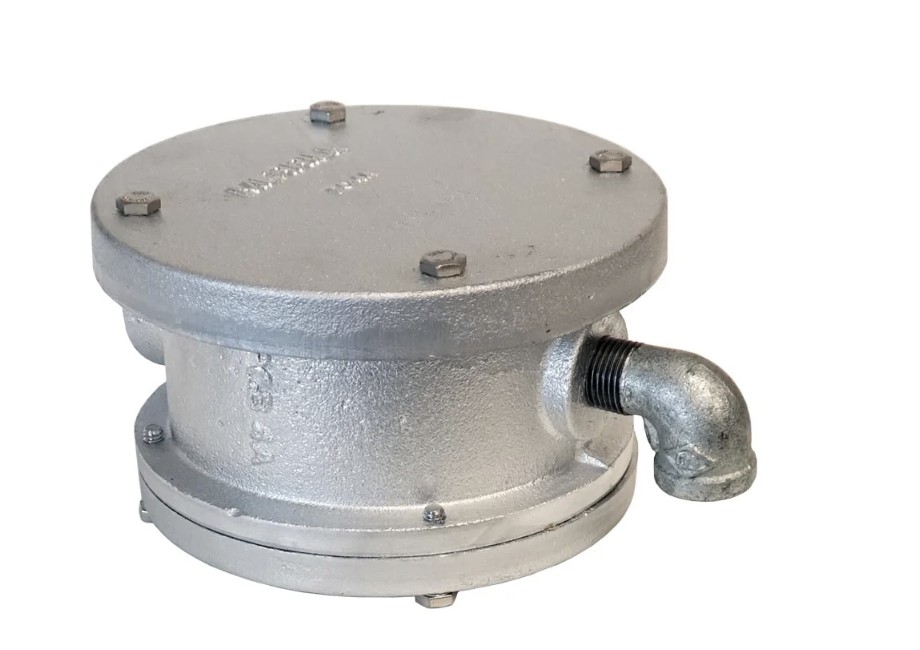
Shop Well Caps
For wells where the water line exits through the side of the casing below ground.
Shop Well Caps
Most private wells use a well cap or well seal to protect the top of the casing. Both help keep debris out, but each is designed for a different well setup.
Step 1
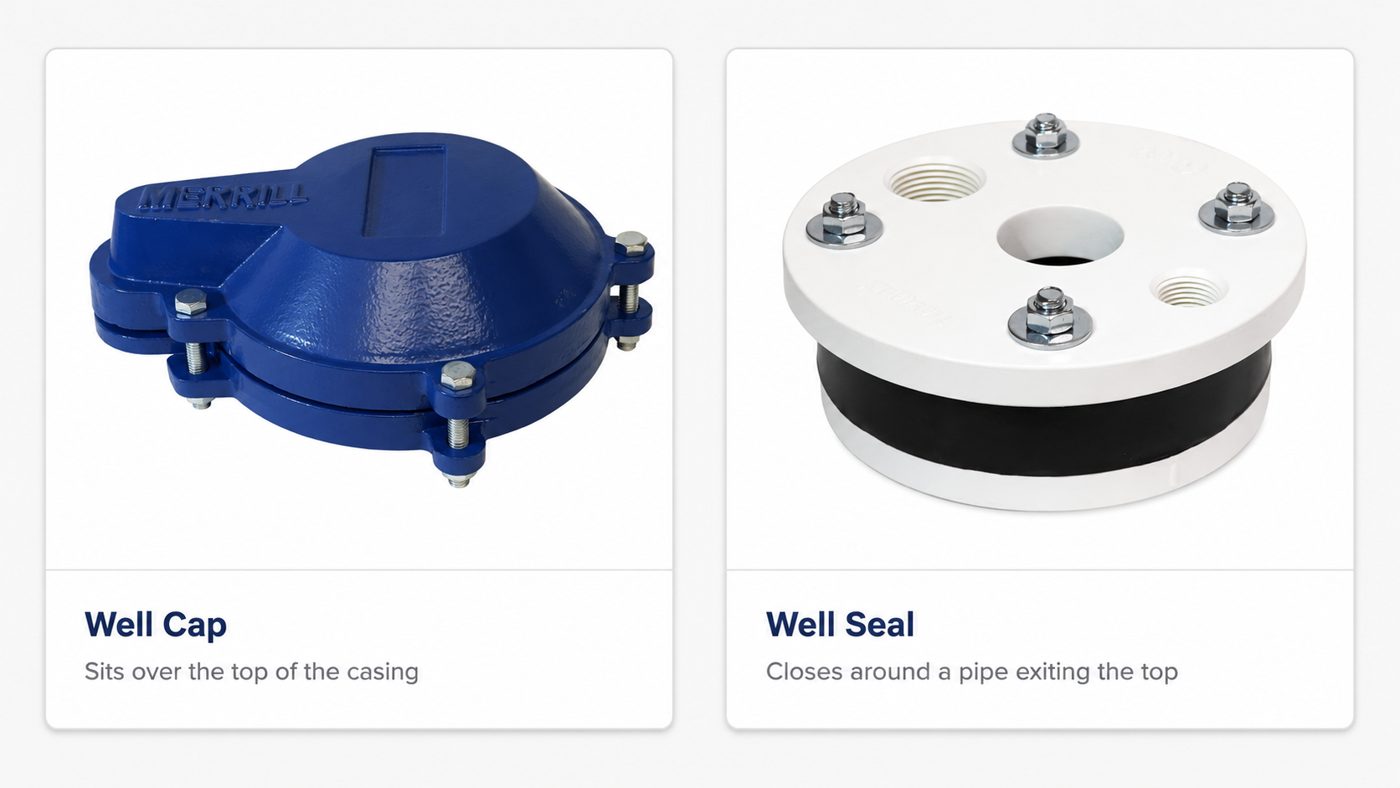
Well cap vs. well seal: both protect the top of your well, but they fit different setups.
Cap = side exit
Seal = top exit
Good to know: Protection depends on the specific product. Always confirm the size, venting, and whether it is watertight.
Step 2
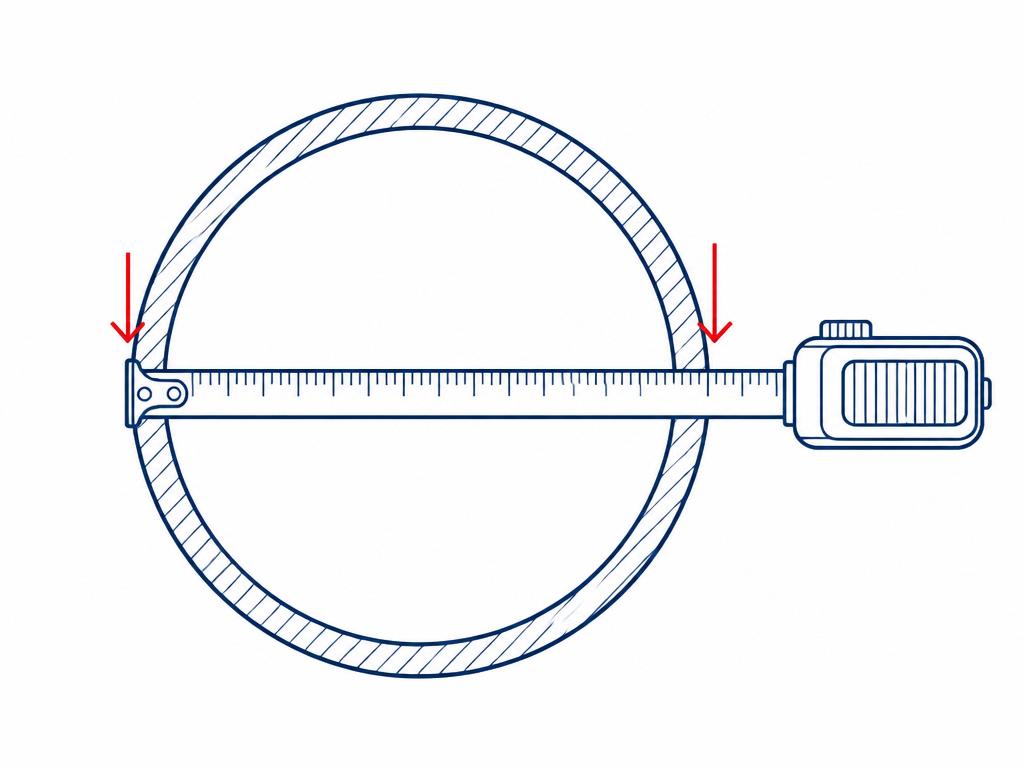
The measurement you need depends on whether you are buying a well cap or well seal. A tape measure is all it takes.
For a Well Cap: Measure the Outside Diameter
Measure straight across the center of the casing from outside edge to outside edge.
For a Well Seal: Measure the Inside Diameter
Measure straight across the center of the casing from inside wall to inside wall.
Measure the casing—not the old cap or seal. The existing part may overlap the casing and give you the wrong size.
Common sizes
These are common casing sizes. Match your actual OD for a cap or ID for a seal to the fit range listed on the product page before ordering.
Step 3
Not every well cap or well seal offers the same protection. Compare standard, vermin-resistant, and watertight options for your private well.
Everyday wellhead protection
Provides basic protection for the top of your well casing. Check the product page for fit, venting, and watertight ratings.
Screened vents & tighter openings
A vermin-resistant well cap helps keep insects, debris, and small animals from entering your well.
Strongest wellhead protection
A gasketed, watertight design provides added protection against surface water, debris, and contaminants.
Good to know: Watertight protection is available for both well caps and well seals. Always confirm the size, fit, venting, and protection rating before ordering.
Step 4
Before ordering, match these details to your well and the product specifications.
Casing Size & Material
Confirm the actual casing ID or OD and whether the product fits steel, PVC, or both.
Vent Size
Match the required vent size so the well can equalize pressure.
Conduit or Wire Opening
Confirm the opening fits your electrical conduit or wiring.
Pipe Configuration
For well seals, check the drop-pipe size and whether you need a single- or double-drop design.
Protection Type
Confirm whether the product is standard, vermin resistant, sanitary, or watertight.
Step 5
Take a close look at your well cap or well seal. These are signs it may be time for a replacement:
Replacing an older standard cap or seal is a good time to consider a vermin-resistant, sanitary, or watertight option for added wellhead protection.
See recommended picksStep 6
You've identified your setup and measured your casing. Choose the product category that fits your well.
For wells where the water line exits through the side of the casing below ground.
Shop Well Caps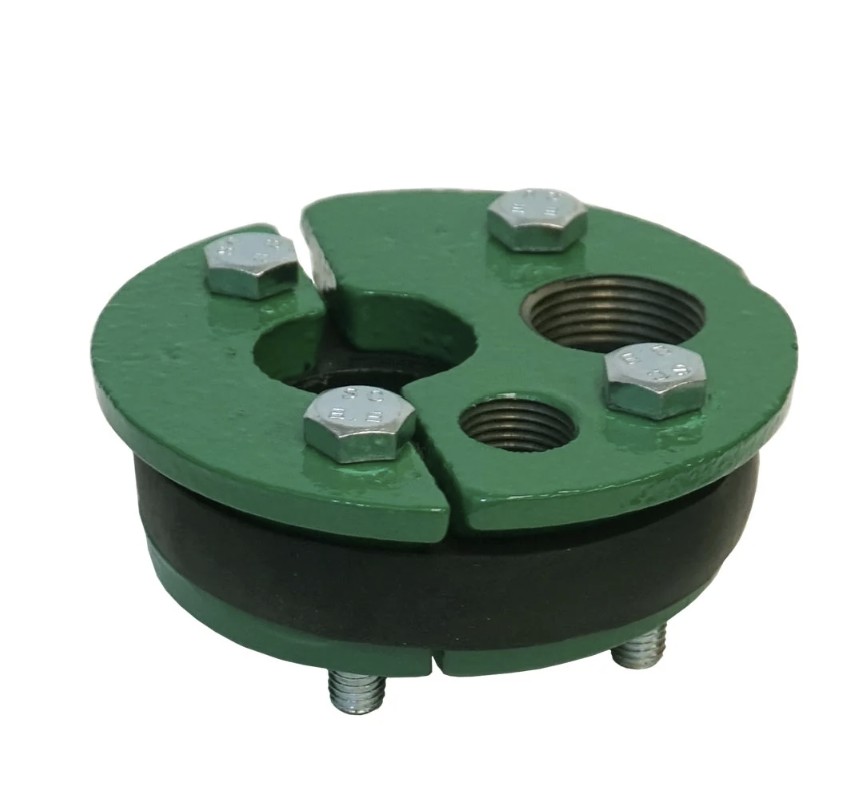
Many well caps can be replaced with basic tools. Call a well professional if wiring, the pump, drop pipe, or damaged casing must be moved.
Do not round up or guess. Match your actual casing measurement to the fit range listed on the Merrill product page.
Take clear photos and measurements of the casing, water-line location, wiring, and existing cap or seal before contacting Merrill or a well professional.
Choose the product category that matches your well setup.
Still unsure? Review Cap vs. Seal